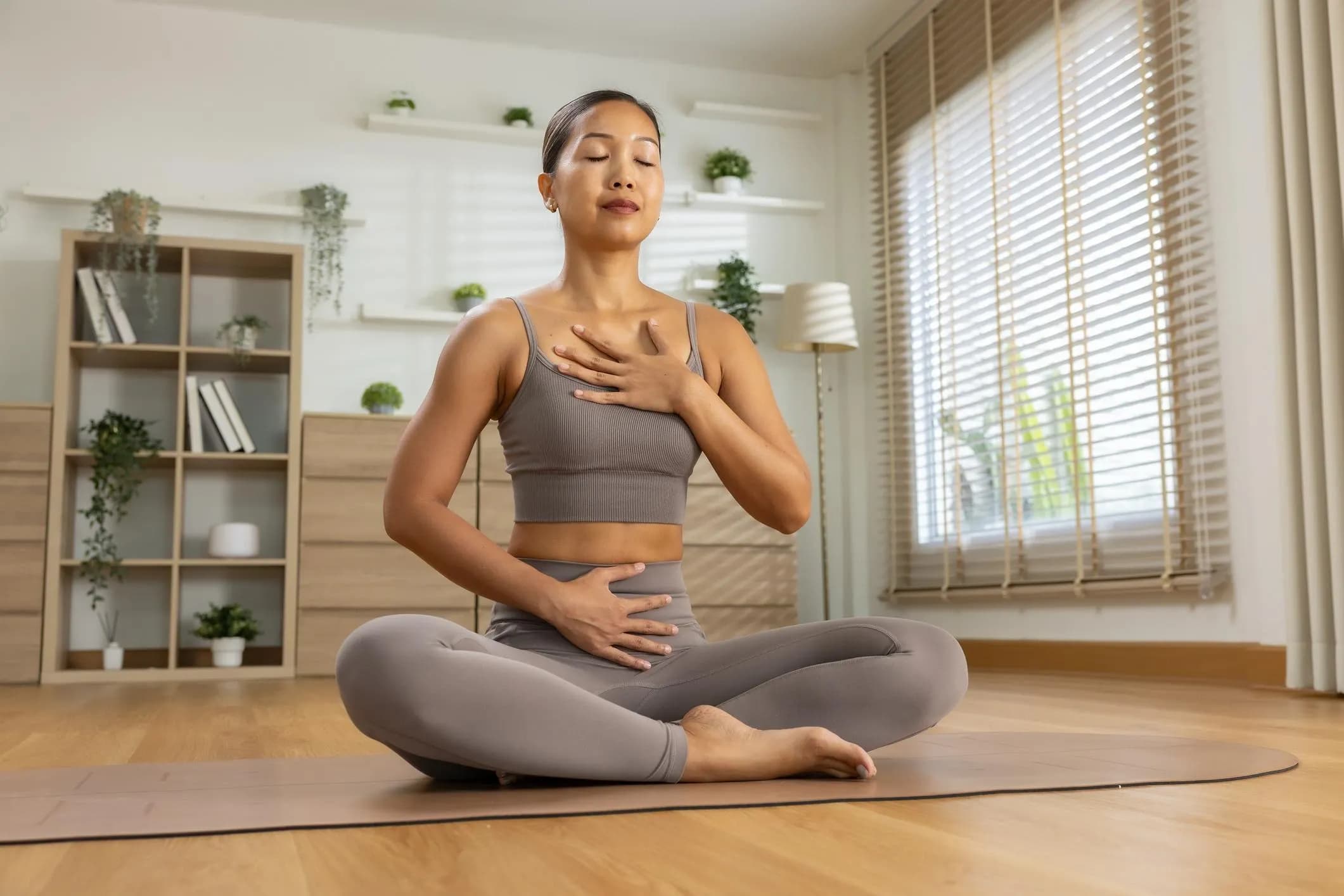
Day 1: Box Breathing Technique
Learn box breathing, a simple 4-4-4-4 pattern that calms stress in about a minute, and try it before a meeting or at bedtime.
Medically reviewed by Lena Hartmann, PhDFact checked by Marcus Bell, PharmDWritten by Daniel Reyes, MS, RD

Key takeaways
- Box breathing uses a 4-4-4-4 pattern: in, hold, out, hold.
- Three or four rounds take about a minute.
- Slow breathing shifts your body from its alert stress response toward a calmer state.
- Use it before a meeting, when tension rises, or at bedtime.
- If four counts feel too long, use two or three instead.
Day 1: Box Breathing Technique
Learn box breathing, a simple 4-4-4-4 pattern that calms stress in about a minute, and try it before a meeting or at bedtime.
Quick answer
The box breathing technique is a slow breathing pattern with four equal parts: breathe in for four counts, hold for four, breathe out for four, and hold again for four. One round takes about 16 seconds, so three or four rounds take about a minute. It is free, needs no equipment, and you can do it at your desk, in a parked car, or in bed at night.
Why it works
When stress rises, breathing often becomes fast and shallow, which can leave you feeling more on edge. Slowing your breath down sends the opposite signal. Slow, steady breathing helps shift your body from its alert stress response toward its calmer rest and digest state, and it can lower levels of the stress hormone cortisol. Most people notice their shoulders drop within a few rounds, and the steady count gives your mind something simple to follow.
How to do it
Find a comfortable seat, or lie down if you prefer. Let your shoulders drop and unclench your jaw. Then follow these steps.
- Breathe out slowly. Let all the air leave your lungs through your mouth.
- Breathe in for four. Breathe in slowly through your nose, and feel your belly rise slightly.
- Hold for four. Hold gently and keep your shoulders and jaw relaxed.
- Breathe out for four. Breathe out slowly through your mouth for a count of four.
- Hold again for four. Hold with your lungs empty for a count of four.
- Repeat for three or four rounds, about a minute.
For a deeper explanation of the technique, see our guide to box breathing.
Your Day 1 Plan: Do This Today
- Learn the pattern now by doing one round slowly.
- Do three or four full rounds in a quiet moment today.
- Try it once more before a meeting or at bedtime.
- Notice how you feel afterward.
Common Mistakes
Counting too fast. Rushing the count turns a calming breath into a race. Slow down and let each part last the full four counts.
Forcing the breath. If four counts feel too long, use a count of two or three instead. Never force the breath, and stop if you feel dizzy or short of breath.
Practicing while driving. Breath holding needs your full attention. Never practice it while driving. Pull over and park first, or wait until you are home.
What if you feel dizzy?
Stop and breathe normally. Dizziness usually means you held the breath too long or breathed too hard. Sit down, take a few easy breaths at your own pace, and try again later with a shorter count of two or three. If dizziness keeps happening, talk with your doctor before trying breathing exercises again.
What To Do Next
You have learned one pattern you can carry into the rest of the week and into any stressful moment. Tomorrow, in Day 2: Body Scan Meditation and Muscle Relaxation, you will build on this calm with a short technique that finds where your body holds tension and lets it go. This article is Day 1 of 7 in Stress Reset.
“If I had to limit my advice on healthier living to just one tip, it would be simply to learn how to breathe correctly.”
This article is for general information only and is not medical advice, diagnosis, or treatment. Box breathing is a self-help tool for everyday stress, not a treatment for any mental health condition. If stress feels overwhelming or it keeps getting in the way of your daily life, talk to your doctor or a qualified healthcare professional.
Frequently asked questions
How many rounds of box breathing should I do?
Three or four rounds are enough for most people, and that takes about a minute. You can do more if it feels good, but stop if you feel dizzy or uncomfortable.
Can I do box breathing at work?
Yes. You can do it at your desk, before a meeting, or in a quiet room. It takes about a minute.
Does box breathing help with sleep?
Many people find it helps them settle at bedtime because slow breathing calms the body. Try a few rounds when you get into bed and see how you feel.
How often can I do box breathing?
As often as you like. A few short sessions a day, for example before a meeting and at bedtime, work well for most people.
How we reviewed this article
Beargoal has strict sourcing guidelines and relies on peer-reviewed studies, academic research institutions and medical associations. We avoid tertiary references. Learn more in our editorial process.
- Cleveland Clinic Box Breathing Benefits and Techniques. https://health.clevelandclinic.org/box-breathing-benefits
No revisions recorded yet.
Medically reviewed by Lena Hartmann, PhDFact checked by Marcus Bell, PharmDWritten by Daniel Reyes, MS, RD
This content is for informational purposes only and is not medical advice, diagnosis or treatment. Read our full disclaimer.