Day 6: Nap the Right Way
Day 6 of Better Sleep: the 20 to 30-minute nap rule, why naps after 3 p.m. steal night sleep, how to nap without grogginess, and when skipping naps is the better choice.
Medically reviewed by Sam WhitfieldFact checked by Amara Okafor, MDWritten by Priya Nair, MPHUpdated on

Key takeaways
- A 10 minute nap can be enough. In Brooks and Lack 2006, the 10 minute nap helped right away, with some benefits lasting up to 155 minutes.
- The 20 minute nap is trickier: benefits only showed up about 35 minutes after waking, while the 30 minute nap started with grogginess.
- NASA pilots who napped 26 minutes improved alertness by 54 percent and performance by 34 percent.
- Finish your nap 7 to 8 hours before bedtime, about 3 p.m. for an 11 p.m. bedtime. A late nap eats the sleep pressure you need at night.
- Set one alarm for about 25 minutes from when you lie down. Without it, a 20 minute nap regularly becomes 60 to 90 minutes.
Day 6: Nap the Right Way
A short nap can rescue your afternoon. A long one can steal your night.
Some people nap for two hours and lie awake all night. Others skip naps and drag through the afternoon. A nap is a tool. Used at the right time and in the right amount, it works. Used late or long, it backfires.
Quick answer: If you nap, aim for 10 to 20 minutes of actual sleep, and finish at least 7 to 8 hours before bedtime. For an 11 p.m. bedtime, that means done by about 3 p.m. Set your alarm for about 25 minutes from when you lie down. A longer or later nap eats into the sleep pressure you need at night. If you live with insomnia, skipping naps for a while is usually the better choice.
Why a Short Nap Works (and a Long One Does Not)
Sleep pressure builds all day as adenosine piles up in your brain. A nap pays off a little of it. A short nap pays off just enough to carry you through the afternoon, and leaves plenty for the night.
A long nap pays off too much. After about 30 minutes, you can slip into deep sleep, and waking from it leaves you groggy for 20 to 30 minutes. That is sleep inertia.
Timing matters as much as length. Count back from your bedtime, like the caffeine cut off in Day 4. Finish at least 7 to 8 hours before bed, so pressure can rebuild. "Before 3 p.m." is just that rule for an 11 p.m. bedtime:
Your bedtime | Finish your nap by |
|---|---|
10 p.m. | about 2 p.m. |
11 p.m. | about 3 p.m. |
Midnight | about 4 p.m. |
That is why the same 20 minute nap can help at lunch and hurt in the evening.
What the Studies Found
In a 2006 study by Brooks and Lack at Flinders University, 24 healthy young adults slept for only about 5 hours, then took naps of exactly 5, 10, 20, or 30 minutes at 3 p.m.:
Nap length | What happened |
|---|---|
5 minutes | Few benefits, barely different from no nap |
10 minutes | Improved sleepiness, fatigue, and performance right away, with benefits lasting up to 155 minutes |
20 minutes | It helped, but benefits only showed up about 35 minutes after waking, and lasted up to 125 minutes |
30 minutes | Alertness and performance dipped right after waking; that is sleep inertia; then benefits lasted up to 155 minutes |
NASA found the same in 1995. Long-haul pilots who slept for an average of 26 minutes in flight improved alertness by 54 percent and performance by 34 percent, compared with pilots who did not nap. Those numbers come from 21 tired pilots, so take them as a nudge, not a promise.
A sleep researcher puts it in plain words:
“It is like putting yourself into low-power mode just for a little bit and letting your body recuperate.”
Your Day 6 Plan: Do This Today
1. Decide: nap or no nap? If you slept 7 to 9 hours last night and feel fine, skip it. If you are tired after a poor night, plan one short nap today as a test.
2. Set the rules before you lie down. Length: 20 to 30 minutes. Set an alarm for 30 minutes from when you lie down. Time: finish at least 7 to 8 hours before bedtime, about 3 p.m. for an 11 p.m. bedtime. After that, walk or get daylight instead, see Day 5. Place: dim, quiet, and cool, like your bedroom in Day 3. No screens: put the phone away, as in your Day 2 wind down. Scrolling eats the nap.
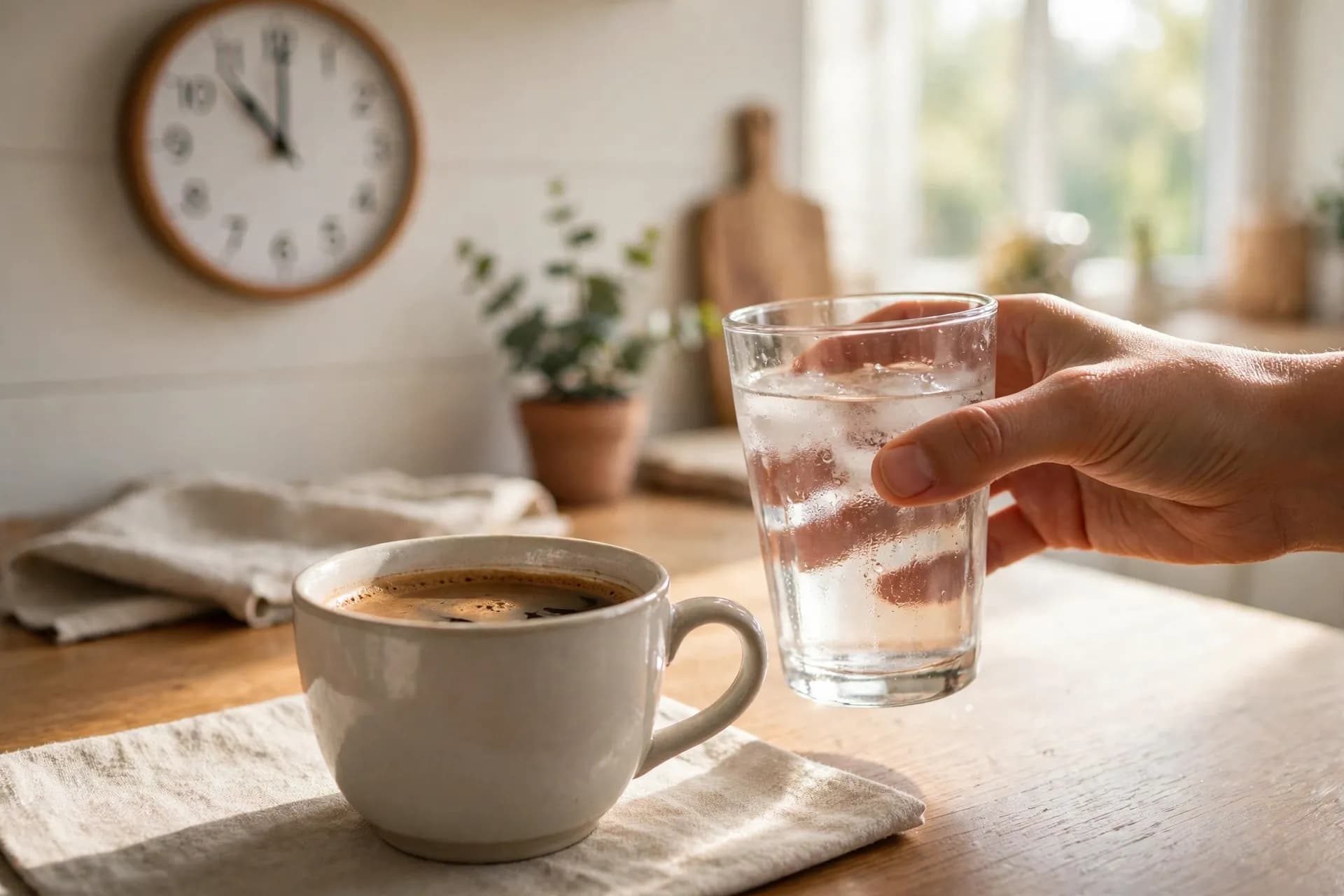
3. Get up when the alarm goes off, even if you feel groggy. Give yourself 10 minutes: daylight, water, and a short walk. The grogginess usually passes in 10 to 20 minutes. Do not lie there for "just five more minutes". That is how a 20 minute nap turns into a 90 minute one.
4. Do not use a nap to replace the night. If you sleep 5 to 6 hours a night and nap for 2 hours every afternoon, the nap is hiding the real problem. Go back to the earlier days: a fixed wake time (Day 1), a wind down (Day 2), and the caffeine cut off (Day 4). Use the Sleep Calculator to check your bedtime leaves 7 to 9 hours.
5. Track it for a week. Note your nap length and time, then how long it took to fall asleep. If nights get harder on nap days, shorten the nap to 20 minutes or move it earlier. Or skip it for a week and compare.
Common Mistakes
Napping for 2 hours "to catch up." A long nap feels good now, but it shifts your clock and cuts night sleep pressure. Short and early is the whole trick.
Napping after 4 p.m. because the day was hard. You are tired, so you nap at 5 p.m., and then you cannot sleep at 11 p.m. If late afternoon is your tiredest time, try a 10 minute walk or a glass of water first.
No alarm, "I'll wake up naturally." You will not, reliably. Without an alarm, a planned 20 minute nap regularly becomes 60 to 90 minutes. One alarm is part of the nap, not optional.
Napping in bed, in the dark, for hours, and calling it a nap. That is a second night's sleep in the middle of the day. Keep the bed mainly for night sleep.
Using naps instead of seeing a doctor. If you need a long nap every day even after 7 to 9 hours at night, or you fall asleep suddenly during the day or while driving, that is not a nap habit. It needs a clinician's assessment. The same goes for loud snoring with gasping, covered in Why Do I Keep Waking Up at 3 a.m.?.
The takeaway
Even if you feel like you never really slept, you still get something from the rest. You only notice sleep once it gets deeper, so a light doze can feel like nothing happened. Lying quietly with your eyes closed still eases tiredness, so do not call the nap a failure just because you stayed half awake.
Frequently asked questions
Is a 20 minute nap really enough to help?
Yes, and 10 minutes may be enough. In the Brooks and Lack (2006) test above, the 10 minute nap improved every measure right away.
What if I cannot fall asleep for a nap?
Do not force it. Lie quietly for 20 minutes in dim light, then get up. Resting still helps. If you cannot nap, you probably do not need one that day.
Are naps bad for people with insomnia?
Often, yes, so clinicians treating insomnia usually ask people to skip naps for a while. If you struggle to fall or stay asleep 3 or more nights a week for 3 months or more, try two weeks without naps. If not, ask your clinician about CBT-I, the first line treatment for chronic insomnia.
What about a "coffee nap": coffee, then a 20 minute nap?
It is a real technique, but the studies are small. In a 1997 driving simulator study, 200 mg of caffeine plus a nap of under 15 minutes cut driving incidents to 9 percent of placebo levels, against 34 percent for caffeine alone. A 2003 lab study found the same: 200 mg before a 20 minute nap cleared post nap sleepiness better than a nap alone, bright light, or face washing, for about an hour. Both used about 150 to 200 mg of caffeine, roughly 1 to 2 cups of coffee, in small groups of young, healthy adults. Use it as a one off tool, not a daily habit. It breaks your Day 4 caffeine cut off in the afternoon, so use it rarely, and only before your cut off time.
Can children or older adults nap differently?
Yes. Young children need naps, and older adults often nap more as night sleep gets lighter. The 20 to 30 minute, before 3 p.m. rule is for healthy adults. If you are over 65 and naps are your main way of getting enough sleep, talk to your clinician.
How we reviewed this article
Beargoal has strict sourcing guidelines and relies on peer-reviewed studies, academic research institutions and medical associations. We avoid tertiary references. Learn more in our editorial process.
- Brooks, A. and Lack, L. (2006). A brief afternoon nap following nocturnal sleep restriction: which nap duration is most recuperative? . https://pubmed.ncbi.nlm.nih.gov/16796222/
No revisions recorded yet.
Medically reviewed by Sam WhitfieldFact checked by Amara Okafor, MDWritten by Priya Nair, MPHUpdated on
This content is for informational purposes only and is not medical advice, diagnosis or treatment. Read our full disclaimer.