Day 9: Surfing a Craving
Learn to ride out a craving for 10 minutes, notice what it feels like, and then decide with a clear head.
Medically reviewed by Amara Okafor, MDFact checked by Sam WhitfieldWritten by Lena Hartmann, PhD

Key takeaways
- A craving is an urge, not a command, and it usually rises and fades.
- Pause for 10 minutes before you decide what to do.
- Name the craving in plain words, and notice where you feel it.
- Do one small thing while you wait, such as drinking water.
- When the timer ends, check the urge again and decide calmly.
Day 9: Surfing a Craving
A craving arrives suddenly. It feels urgent. It feels permanent. It is neither. Learning how to deal with food cravings begins with a single skill: waiting. Not fighting. Not surrendering. Waiting, with attention. That skill has a name. It is called urge surfing, and today you will practise it.
1. What a Craving Really Is
A craving is a strong urge for one specific food. It is not the same as hunger. Hunger builds slowly and accepts many foods. A craving is sudden, narrow, and loud. One food. Right now. The distinction matters, because the two need different responses.
1.1 The Wave Pattern: Rise, Peak, Fall
Cravings behave like waves. They rise. They peak. They fall. The peak feels endless, but it is not. Most urges soften within minutes when you stop feeding them with action. The wave always breaks. Your job is to stay on the board until it does.
1.2 Craving Versus True Hunger
Two questions separate them. When did you last eat? And would you eat something plain, like rice or an apple? If you ate hours ago and plain food sounds fine, it may be hunger. If you ate recently and only chocolate will do, it is a craving. Hunger is homeostatic: the body asking for fuel. A craving is often hedonic: the brain asking for pleasure, comfort, or relief.
2. Why Willpower Alone Usually Fails
Willpower treats a craving as an enemy to defeat. The fight keeps the craving in the spotlight. Psychologists call this the ironic process: pushing a thought away makes it return stronger. Tell yourself not to think about biscuits, and biscuits are all you can think about. Surfing works differently. It changes your relationship with the urge instead of wrestling it. You do not need a stronger will. You need a better vantage point.
3. Urge Surfing, Explained
Where the Idea Comes From
Urge surfing comes from mindfulness-based addiction treatment. Clinicians developed it to help people ride out urges without acting on them. The method later spread to eating, because food cravings follow the same pattern: a trigger, a surge, a peak, and a fade.
What Surfing Actually Means
A surfer does not stop the wave. The surfer rides it. You notice the craving. You watch it change. You let it pass. The urge is information, not an order. This stance has a name in psychology: decentering. You step back and observe the feeling instead of becoming it.
4. The 10-Minute Rule
Ten minutes is the heart of today's exercise. It is long enough for the wave to crest and soften. It is short enough to feel possible. You are not saying no forever. You are saying: not yet, let me check. The timer turns an endless urge into a bounded experiment.
5. How to Surf a Craving, Step by Step
Try this the next time a craving appears today.
- Pause and name it: Stop. Say it plainly: I am having a craving for biscuits. Naming it creates distance. You are the observer, not the urge.
- Set the timer: Ten minutes. Phone or kitchen timer. Let it run in the background.
- Notice the body: Where do you feel it? Mouth watering? Restlessness in the hands? Tightness in the chest? Notice without judging. This is interoception: sensing what is happening inside your body.
- Do one small thing: Drink a glass of water. Step outside. Stretch for a minute. Make a cup of tea. One small action fills the wait.
- Check in and decide: When the timer ends, rate the urge from 1 to 10. Ask: am I still hungry? Do I still want this food? Then decide calmly.
6. Reading Your Body: Interoception
Interoception is your sense of the body's internal signals. Hunger, fullness, thirst, and tension all arrive through it. Cravings often masquerade as hunger. A short body scan separates them. Close your eyes for thirty seconds. Scan from head to stomach. Notice what is actually there. Often the hunger turns out to be tiredness. Or stress. Or boredom wearing hunger's clothes. The scan takes less than a minute, and it changes the decision.
7. What to Do While You Wait
The wait needs a job. Without one, ten minutes stretches. Drink water slowly. Walk to the window. Tidy one shelf. Step outside for air. The activity is not an escape from the feeling. It is a way to stay with it without obeying it. Movement helps most. A short walk changes the scene, and a new scene weakens the cue.
8. When the Timer Ends
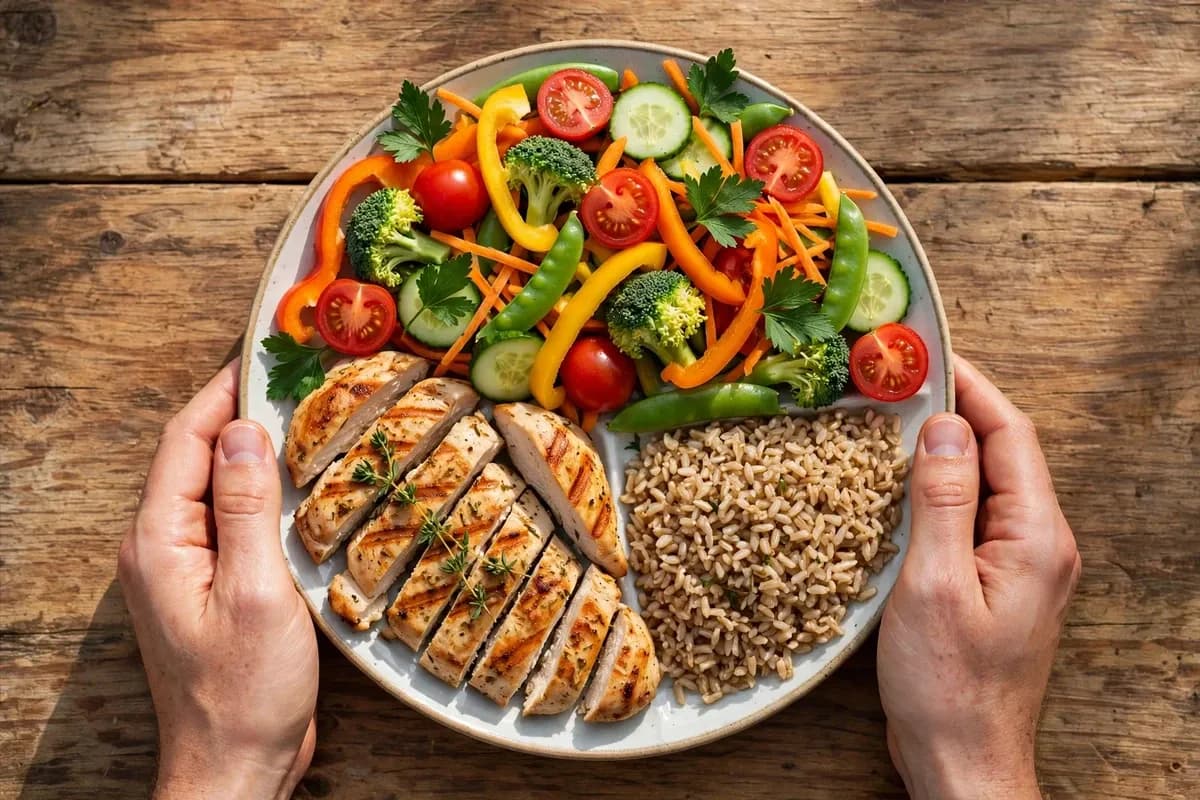
Three outcomes are possible. The urge faded: notice that, and move on. The urge is still there but weaker: eat a portion slowly, and enjoy it. You are still hungry: eat a proper meal, using the plate from Day 8: The Balanced Plate. All three are fine. The win is not refusing the food. The win is choosing on purpose. Every surf, even one that ends in eating, teaches the brain that urges pass.
9. Cravings and Emotions
Many cravings are emotional. Stress, boredom, sadness, and tiredness all send people to the cupboard. The food is rarely the real need. Rest is the need. Or comfort. Or a break. Surfing gives the feeling a name before the food gets one. Over time, this builds a map of your triggers. Tuesday afternoons. Long calls. Late nights. Once you see the pattern, you can meet the need directly. A tired evening needs sleep, not sugar. A dull afternoon needs a walk, not a snack.
10. Common Mistakes
- Fighting the craving: Fighting feeds it. Notice instead.
- Waiting with no plan: Ten minutes feels endless without an activity. Choose one first.
- Deciding at the peak: The peak is the worst moment to choose. Wait for the timer.
- Calling a craving a failure: A craving is not a verdict. It is weather. It passes.
- Staring at the clock: Let the timer run in the background. Watch the tea, not the time.
11. Your Day 9 Plan
- The next time a craving appears, pause and name it.
- Set a timer for 10 minutes and notice where you feel it.
- Do one small thing while you wait, such as drinking water.
- When the timer ends, rate the urge from 1 to 10.
- Decide calmly: eat a portion slowly, or move on.
Tomorrow, in Day 10: Snacking Mindfully, you will use the same slow attention for a snack you choose on purpose. For more on balanced meals, visit the Nutrition hub.
“Cravings are like waves, they rise, peak, and fall.”
This content is for informational purposes only and is not medical advice, diagnosis, or treatment. Mindful eating is a general wellness practice, not a treatment for an eating disorder. If eating feels out of control or causes distress, talk to a clinician or registered dietitian.
Frequently asked questions
Is urge surfing the same as ignoring a craving?
No. Ignoring means pushing the feeling away. Urge surfing means noticing the craving and watching how it changes, then deciding calmly.
What if I give in after 10 minutes?
That is not a failure. If you still want the food, serve a portion and eat it slowly. You chose on purpose, instead of acting on autopilot.
How do I tell a craving from real hunger?
Hunger often builds slowly, and many foods sound acceptable. A craving is often sudden and focused on one food. Ask when you last ate, and whether plain food would do.
Can I surf a craving for a drink instead of food?
Yes, the same pause works. Set a timer, notice the urge, and do something small while you wait. Have a glass of water first, then decide.
How we reviewed this article
Beargoal has strict sourcing guidelines and relies on peer-reviewed studies, academic research institutions and medical associations. We avoid tertiary references. Learn more in our editorial process.
- Harvard Health Mindfulness techniques can be more than quiet contemplation. https://www.health.harvard.edu/mind-and-mood/mindfulness-techniques-can-be-more-than-quiet-contemplation
No revisions recorded yet.
Medically reviewed by Amara Okafor, MDFact checked by Sam WhitfieldWritten by Lena Hartmann, PhD
This content is for informational purposes only and is not medical advice, diagnosis or treatment. Read our full disclaimer.