Day 8: The Balanced Plate
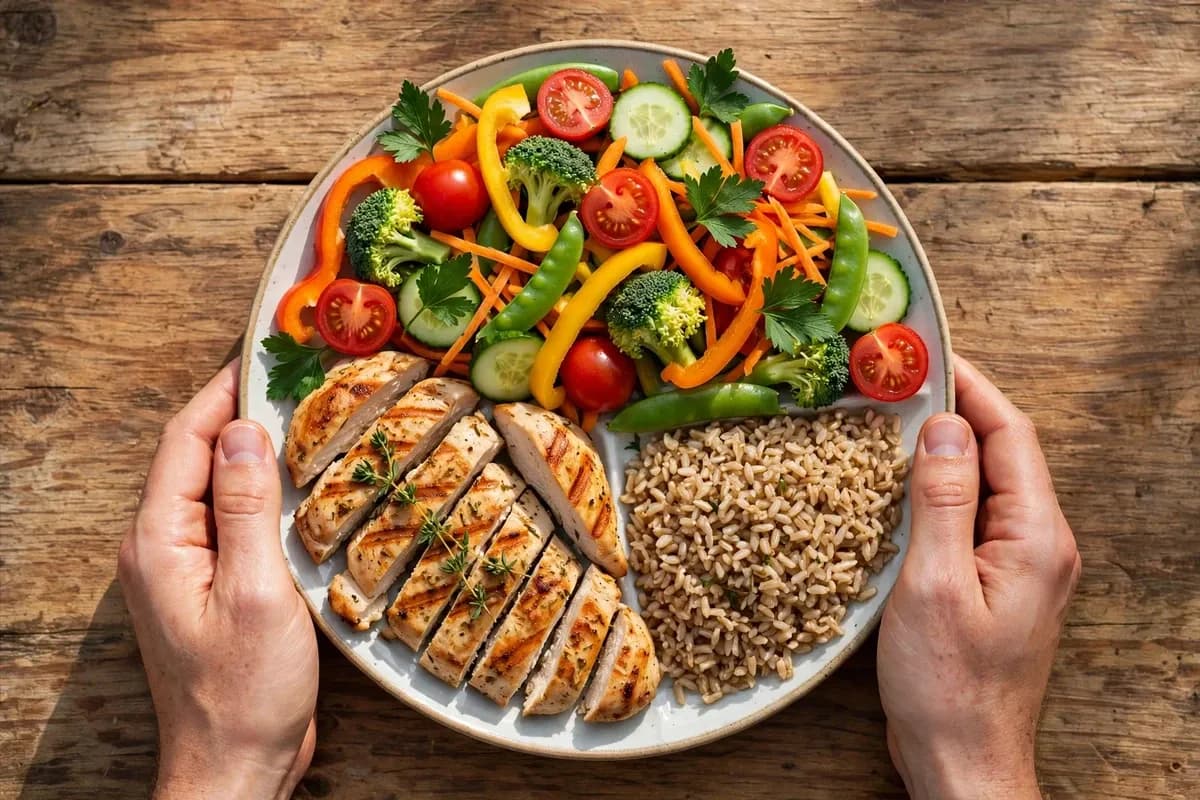
Use a simple plate picture to build a balanced meal: half vegetables and fruit, a quarter protein, and a quarter whole grains.
Medically reviewed by Amara Okafor, MDFact checked by Marcus Bell, PharmDWritten by Lena Hartmann, PhD
Key takeaways
- The balanced plate method uses a picture, not rules.
- Half the plate is vegetables and fruit, in two colours if you can.
- One quarter is a protein food, which helps you feel satisfied.
- One quarter is whole grains, such as brown rice or oats.
- Look at the plate first, then eat slowly.
Day 8: The Balanced Plate
Use a simple plate picture to build a balanced meal: half vegetables and fruit, a quarter protein, and a quarter whole grains.
Quick answer
The balanced plate method is a simple way to build a meal you can see at a glance. Fill half your plate with vegetables and fruit, one quarter with a protein food, and one quarter with whole grains.
Why it works
The plate picture turns a complex idea into something you can see. With half vegetables and fruit, a quarter protein, and a quarter whole grains, a meal naturally includes a range of nutrients and fibre, and it is more likely to keep you satisfied. The Harvard Healthy Eating Plate uses this shape, and MyPlate uses a very similar one.
How to do it
Choose one meal today, lunch or dinner.
- Fill half the plate with vegetables and fruit. Aim for colour, such as leafy greens, carrots, broccoli, peppers, or fruit.
- Fill one quarter with a protein food. Try fish, poultry, eggs, beans, lentils, tofu, nuts, or seeds. See How Much Protein Per Day.
- Fill the last quarter with whole grains. Try brown rice, whole wheat bread, pasta, oats, barley, or quinoa.
- Add a drink and a little healthy oil. Water is a good choice. A small amount of olive oil can add flavour.
- Look at the plate before you eat. Is half the plate vegetables and fruit? Is there a protein food and a whole grain?
- Eat slowly and check in. Chew well, put your fork down between bites, and pause halfway, as in Day 7: Chew Well.
Your Day 8 Plan: Do This Today
- Pick one meal, lunch or dinner, to build as a balanced plate.
- Fill half the plate with vegetables and fruit, in two colours.
- Fill one quarter with a protein food and one quarter with whole grains.
- Add water, and look at the plate before your first bite.
- Eat slowly, and pause halfway.
Common Mistakes
Trying to make the plate perfect. A perfect plate is not the goal. If one part is missing, notice it and move on.
Filling the plate with only one kind of food. A plate of only grains or only protein can leave you less satisfied. Add one vegetable, even a small salad.
Forgetting to look before you eat. The picture only helps if you see it. Take five seconds to look first.
Eating fast and missing the check in. A balanced plate eaten in a rush can still leave you feeling as if you never ate. Slow down.
Forgetting the drink. Water is part of a balanced meal too. A glass of water with the meal helps you slow down, and it is a good habit on its own. Keep a glass on the table before you sit down.
What if your meal does not fit the plate picture?
Many meals do not fit neatly on a plate. Soup, stew, a sandwich, a stir-fry, or a one-pot meal can all be balanced without looking like the picture. Think about the meal as a whole. Does it include vegetables or fruit, a protein food, and a whole grain? If yes to two or three, you are on track.
Make it stick
The plate picture works best when it is easy to remember. Try one of these small habits to keep it in mind. First, keep a photo of a balanced plate on your phone, so you can glance at it before you serve a meal. Second, use the same plate each day, and fill it in the same order: vegetables first, then protein, then whole grains. Third, when you shop, buy one extra vegetable each week, so the vegetables are already in the fridge when you need them. None of this needs to be perfect. The goal is to make the balanced plate the easy choice, not a test you pass or fail. After a week or two, you will find you can picture the plate without thinking about it.
What To Do Next
Tomorrow, in Day 9: Surfing a Craving, you will ride out a craving for 10 minutes and then decide with a clear head. For more, visit the Nutrition hub.
“Eat food. Not too much. Mostly plants.”
This content is for informational purposes only and is not medical advice, diagnosis, or treatment. Mindful eating is a general wellness practice, not a treatment for an eating disorder. If eating feels out of control or causes distress, talk to a clinician or registered dietitian.
Frequently asked questions
Does the balanced plate method work for every meal?
It works best for main meals such as lunch and dinner. Breakfast, snacks, and mixed dishes do not always fit the picture. Aim for balance across the day, not perfection at one meal.
What counts as a protein food?
Fish, poultry, eggs, beans, lentils, tofu, nuts, seeds, yogurt, and cheese all count. Choose the ones you enjoy.
Do I need to measure my food?
No. If the plate looks about half vegetables and fruit, a quarter protein, and a quarter whole grains, that is enough.
What about breakfast?
Breakfast does not have to fit the plate picture. A simple breakfast with fruit, yoghurt, and oats, or eggs with toast and a piece of fruit, covers the same ideas: something fresh, a protein food, and a whole grain.
How we reviewed this article
Beargoal has strict sourcing guidelines and relies on peer-reviewed studies, academic research institutions and medical associations. We avoid tertiary references. Learn more in our editorial process.
- Harvard T.H. Chan School of Public Health Healthy Eating Plate . https://nutritionsource.hsph.harvard.edu/healthy-eating-plate/?hl=tr-TR
No revisions recorded yet.
Medically reviewed by Amara Okafor, MDFact checked by Marcus Bell, PharmDWritten by Lena Hartmann, PhD
This content is for informational purposes only and is not medical advice, diagnosis or treatment. Read our full disclaimer.