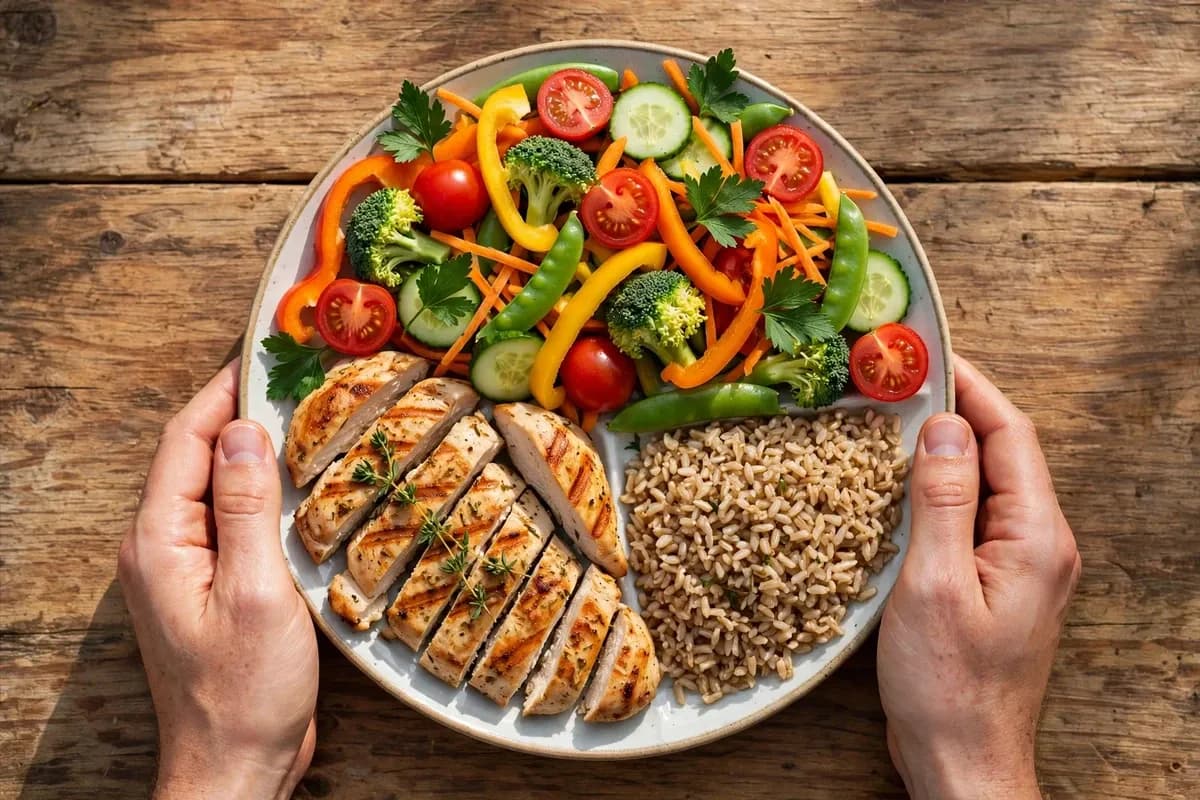
Day 2: Slow Down, Take 20 Minutes for One Meal
Set a timer and stretch one meal to a full 20 minutes, so your body has time to tell you that you are satisfied.
Medically reviewed by Daniel Reyes, MS, RDFact checked by Sam WhitfieldWritten by Marcus Bell, PharmD

Key takeaways
- Fullness signals take about 20 minutes to reach your brain.
- A timer turns slowing down into a clear, simple task.
- Putting your fork down between bites builds in natural pauses.
- Check your hunger halfway, and stop when you feel satisfied.
- Slowing down is about timing, not willpower.
Day 2: Slow Down, Take 20 Minutes for One Meal
Set a timer and stretch one meal to a full 20 minutes, so your body has time to tell you that you are satisfied.
Quick answer
Learning how to eat slowly is simple: give one meal a full 20 minutes. Your stomach needs about that long to tell your brain food has arrived. Finish in eight minutes, and you can feel hungry even when you have had enough.
Why it works
When food reaches your stomach, it takes about 20 minutes for fullness messages to reach your brain. A fast meal ends before those messages arrive, so you can feel hungry even when you have had enough. Slowing down lets the message land while you are still eating, so the 6 or 7 from Day 1: The Hunger and Fullness Scale can show up before the plate is empty. Studies of eating pace link slower eating with eating less at a meal while feeling just as satisfied. If rushed evenings are part of the problem, our Sleep hub has simple ideas for a steadier wind-down.
What the research says
In a small study at the University of Rhode Island, 30 healthy women ate the same pasta meal twice, once quickly and once slowly. When they ate quickly, they finished in about nine minutes and took in around 646 calories. When they ate slowly, putting the fork down between bites and chewing each mouthful well, the meal took about 29 minutes, and they took in around 579 calories, about 67 fewer. They also felt fuller at the end of the slow meal, and still felt fuller an hour later. The study was small and short, and it looked at one meal, not long-term change. But it matches the idea behind today: a slower pace gives your body time to send the signals that tell you that you have had enough.
How to do it
- Sit down at a table. Eating at a table tells your brain a meal is happening.
- Set a timer for 20 minutes before your first bite.
- Chew your first bite well before reaching for the next one.
- Put your fork or spoon down between bites, so a natural pause appears.
- Sip water every few bites. It gives you another reason to pause.
- Check in halfway and rate your hunger from 1 to 10.
Your Day 2 Plan: Do This Today
- Pick one meal today and set a timer for 20 minutes.
- Sit at a table and take your first bite slowly.
- Put your fork down between bites and sip water as you go.
- Check your hunger halfway and note the number.
- When the timer ends, stop and notice how satisfied you feel.
Common Mistakes
Watching the clock instead of the food. Checking the timer every minute makes the meal feel longer. Set it, then focus on each bite.
Speeding up near the end. Many people slow down at first, then rush the last few bites. Keep the same pace to the end.
Skipping the halfway check. Without the check-in, you lose the chance to stop early. Pause halfway and rate your hunger.
Eating slowly only at the start. Some people slow down for the first few bites and then rush the rest. The last bites count too. Keep the fork down between bites all the way to the end of the meal.
What if 20 minutes feels too long?
That is normal on the first try. Try eating with your non-dominant hand for a few bites, or pause to look out of the window. If you eat with others, match the slowest eater at the table. The pace will feel more natural after a few days.
What To Do Next
You stretched one meal to 20 minutes and gave your fullness signals time to arrive. Tomorrow, in Day 3: No Screens at Meals, you will remove the biggest thing that speeds meals up without you noticing: the screen in front of you.
“Mindful eating encourages us to make choices that are satisfying and nourishing to the body.”
Frequently asked questions
Does eating slowly really help you feel full?
Yes. It gives fullness signals time to reach your brain, so people who eat slowly often feel just as satisfied after a meal.
What if I only have ten minutes for lunch?
Use the same ideas in a shorter meal: put your fork down between bites and chew well. Even a small slowdown helps.
Should I count my chews?
No. Chew until the food is soft and easy to swallow, and let the food, not a count, guide you.
Is 20 minutes a magic number?
No. Twenty minutes is a useful guide because fullness signals take about that long to arrive. Some meals will take a little less, some a little more. The pace matters more than the exact time.
How we reviewed this article
Beargoal has strict sourcing guidelines and relies on peer-reviewed studies, academic research institutions and medical associations. We avoid tertiary references. Learn more in our editorial process.
- Slow Down and Try Mindful Eating . Harvard Health Publishing. https://www.health.harvard.edu/staying-healthy/slow-downand-try-mindful-eating
No revisions recorded yet.
Medically reviewed by Daniel Reyes, MS, RDFact checked by Sam WhitfieldWritten by Marcus Bell, PharmD
This content is for informational purposes only and is not medical advice, diagnosis or treatment. Read our full disclaimer.